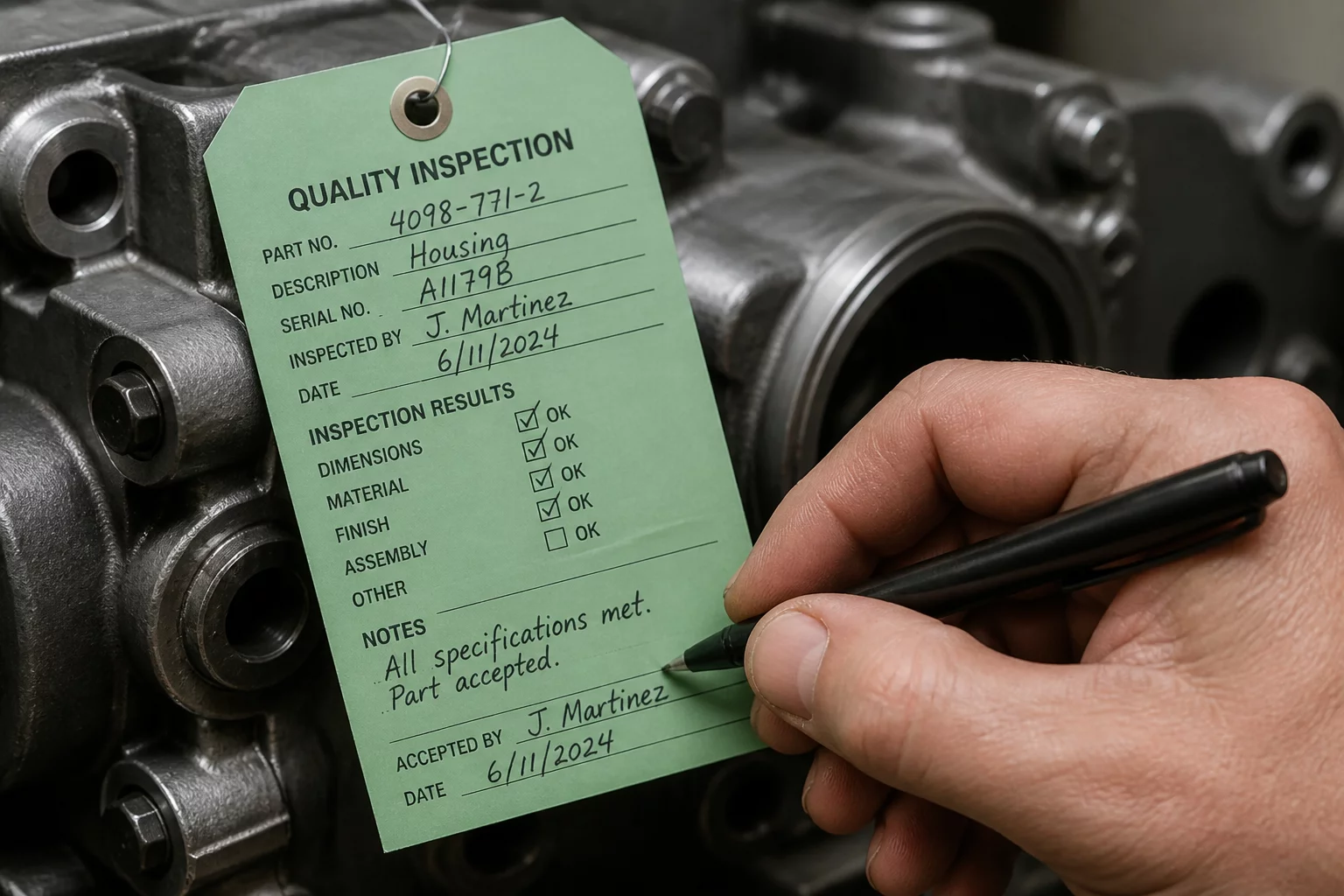
An acceptance note is the final handshake between quality control and the assembly line. It represents more than a binary pass or fail; it is a permanent record of why a specific part, with all its unique characteristics, was deemed fit for service. In the world of additive manufacturing, where layer by layer variations are inevitable, a vague note is a liability. A clear one, however, is a tool for repeatability and continuous improvement.
The Dangers of Ambiguity
I have seen countless production delays caused by notes like "Part looks okay" or "Within general tolerances." When a part reaches the next stage of production and a technician notices a minor surface blemish, they might hesitate if the documentation doesn't explicitly mention it. This hesitation leads to re-inspections, waste, and frustration. Precision in writing removes the need for second-guessing.
Core Elements of a Professional Note
When you sit down to document a decision, you should aim for five specific pillars of information. This ensures that anyone reading it months later will understand the exact context of the approval.
- The Observation: State exactly what you see. Use technical terms like "seam alignment," "overhang stability," or "dimensional deviation."
- The Threshold Reference: Mention which standard or criteria you are using. For example, "Meets Class B visual standards for non-functional surfaces."
- The Location: Be specific about where the observation was made. "Internal lattice structure" or "Top-facing mating surface."
- The Functional Justification: Explain why the observed variation doesn't impact performance. "Slight stair-stepping on the outer radius does not interfere with the mechanical fit."
- Unambiguous Verdict: Conclude with a clear statement like "Accepted for assembly" or "Released for finishing."
Choosing the Right Vocabulary
Effective quality documentation avoids emotional or subjective language. Instead of saying the part looks "nice," say the surface finish is "consistent with the master sample." Instead of saying the part is "good enough," state that it "remains within the calculated safety margin for tensile strength." This transition to objective language creates a trail of accountability that protects both the inspector and the organization.
Bridging the Gap to Production
Ultimately, the acceptance note travels with the part. It tells the end-user or the assembly team that this component has been scrutinized and approved by a professional who understands its role. By taking an extra minute to write a clear, descriptive note, you are building a database of knowledge that helps refine future print settings and acceptance criteria.
Need Expert Guidance?
Consult our specialized manuals for additive manufacturing standards and part review protocols.