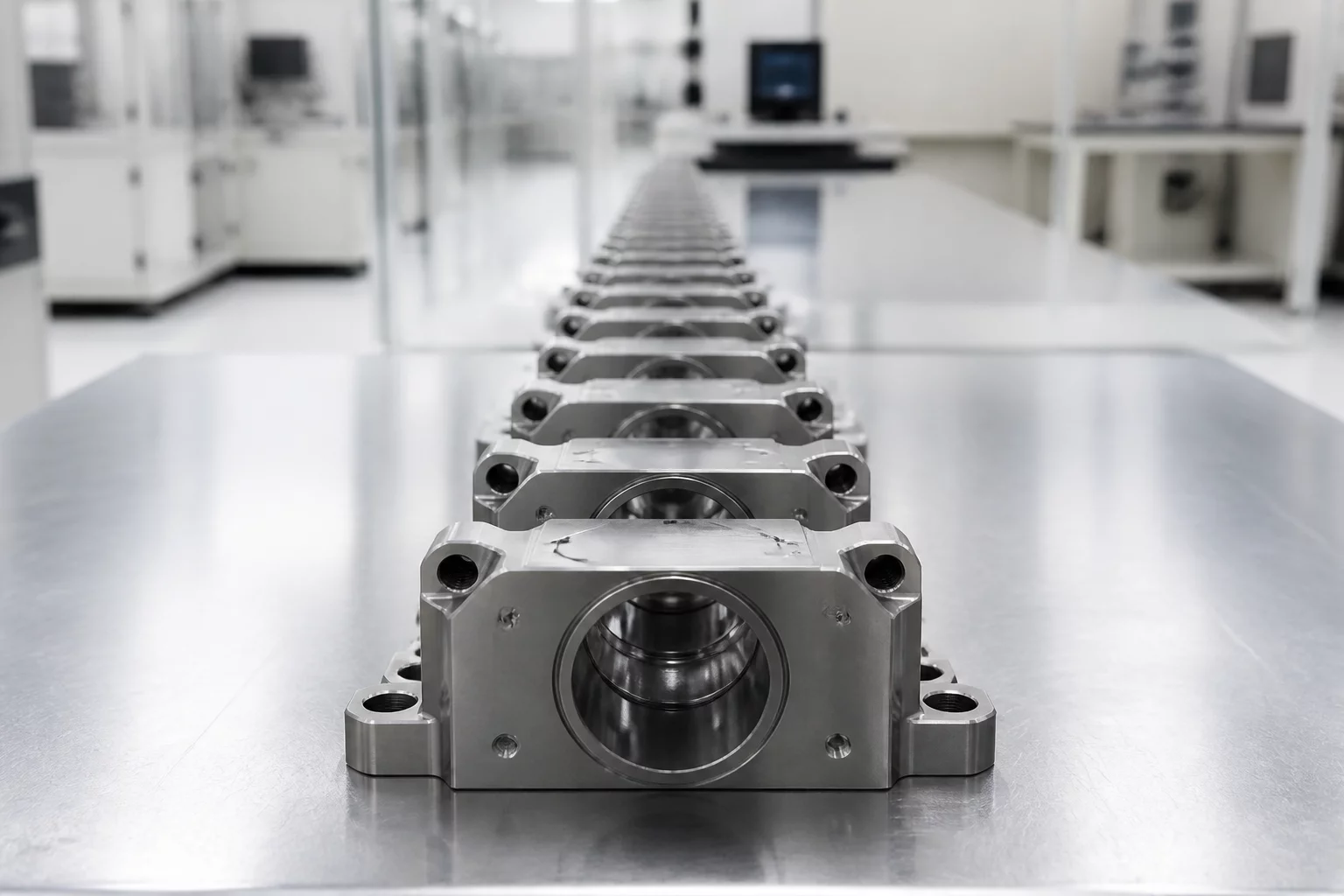
Achieving a high-quality 3D printed part once is a significant milestone, but achieving it every single time is a hard requirement for professional manufacturing. Repeatability serves as the vital bridge between a successful one-off prototype and a reliable, scalable production process. In the context of additive manufacturing, acceptance should never be granted based on a single outlier; it must be the evidence of a stable, predictable system.
The Illusion of the "Golden Sample"
Teams frequently fall into the trap of initiating final acceptance procedures based on what is known as a "golden sample." This individual part represents the peak performance of the machine and the material at a specific moment. However, it often ignores the natural drift that occurs over hours of operation. True quality control mandates that the tenth part in a series matches the first with negligible variance. Otherwise, the acceptance of the batch remains a gamble rather than a data-driven business decision.
Key Factors Impacting Batch Stability
Several environmental and mechanical variables can quietly sabotage repeatability. Recognizing these threats allows engineers to harden their processes before the review stage begins. Even minor deviations in ambient humidity or a slight accumulation of carbonized material in a nozzle can cause thermal instability that ruins part consistency.
- Thermal Equilibrium: Maintaining a constant build plate and chamber temperature over 48 hours of printing.
- Material Batching: Using filament or powder from the same production lot to eliminate chemical differences.
- Machine Health: Routine verification that belt tension and axis alignment have not shifted during high-speed movements.
- Environmental Control: Ensuring the laboratory moisture levels do not fluctuate between day and night shifts.
The Validation Protocol
To verify repeatability before signing a production handoff, a structured batch test is essential. Inspectors should analyze a cluster of results rather than individual successes. If a set of five parts shows a dimensional variance of more than 0.05mm between the smallest and largest specimen, the process is considered unstable. Even if all parts technically fall within the tolerance band, the high internal variance suggests that the machine is operating on the edge of failure.
"A single perfect part is an accident; a hundred identical parts is engineering."
Before moving a project to the final review stage, we recommend running a stress test batch. This involves printing the same geometry in different areas of the build plate and comparing surface finishes, layer adhesion strength, and critical tolerances. Only when the results are visually and functionally indistinguishable from one another is the project ready for official acceptance.
Need Expert Guidance?
Consult our specialized manuals for additive manufacturing standards and part review protocols.