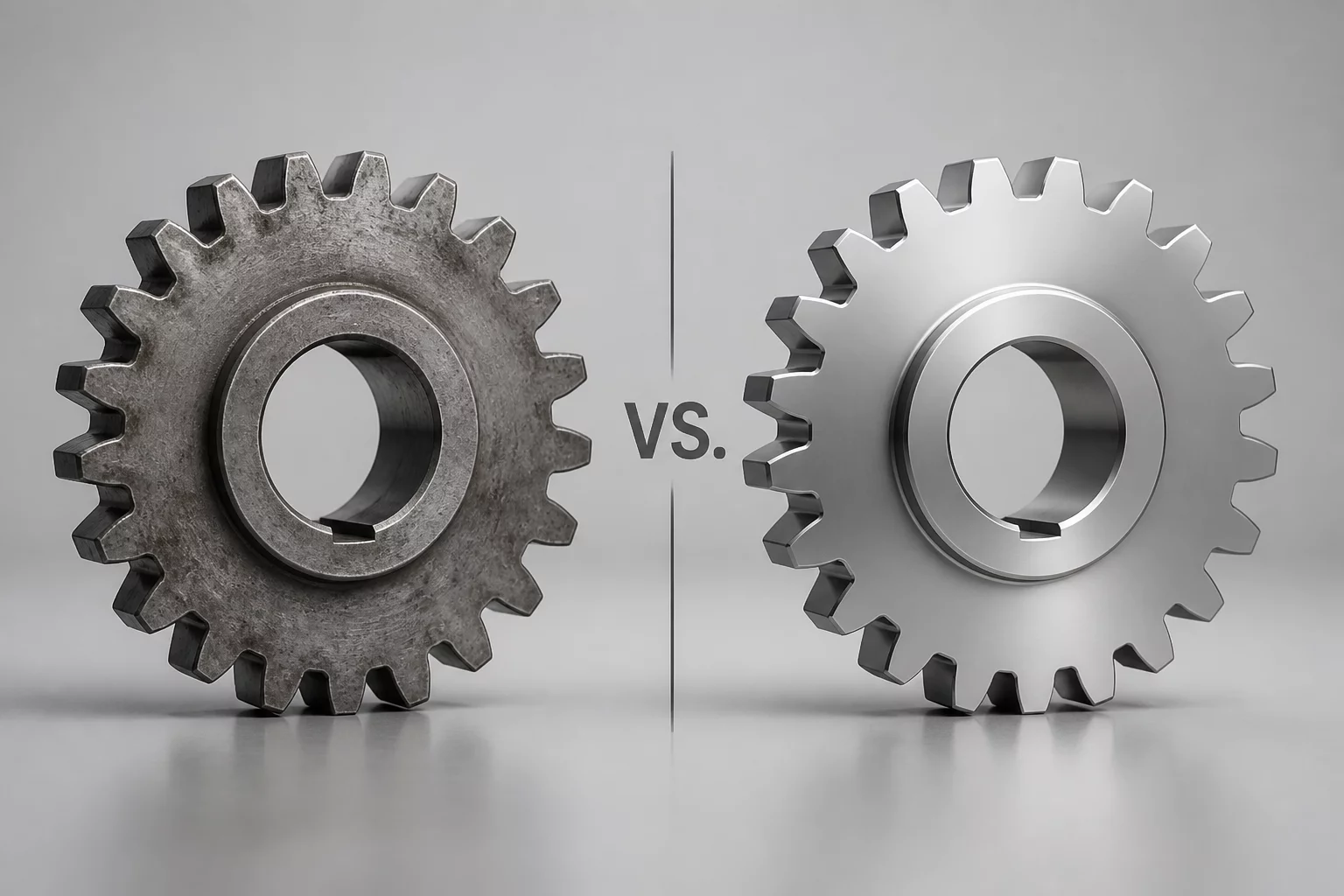
Distinguishing between what a part must do and how it should look is the cornerstone of professional quality control. In additive manufacturing, where surface artifacts are common, failing to define this distinction leads to excessive waste and delayed timelines.
The Essential Divide: Critical Requirements
Critical requirements are the non-negotiables of your project. These are the parameters that, if not met, render the part non-functional or unsafe. Typically, these include dimensional tolerances for mechanical interfaces, tensile strength for load-bearing components, and heat resistance for parts operating in high-temperature environments. When reviewing a batch of 3D-printed gears, for instance, the tooth profile and center bore diameter are critical. If the gear doesn't mesh correctly or fits too loosely on its shaft, it doesn't matter how perfect the top surface looks—the part is a technical failure.
Navigating Preferred Requirements
Preferred requirements, on the other hand, are the elements that enhance the quality or brand value of a part without affecting its fundamental utility. These are often aesthetic: the specific RAL color of the filament, the smoothness of curved surfaces, or the presence of minor "ringing" artifacts on vertical walls. While we always aim for the highest visual quality, these features are often negotiable. In many industrial applications, a part with slight discoloration that meets all structural and dimensional specs is perfectly acceptable. Recognizing this allows the production team to move forward without unnecessary re-runs.
Why Clarity Improves Throughput
The main reason to separate these requirements is to establish a clear decision-making path for the quality inspector. Without this clarity, inspectors often lean toward perfectionism, rejecting parts for minor cosmetic flaws that the end-user would never notice. This creates a massive bottleneck in the production cycle. By explicitly labeling requirements as "Critical" or "Preferred," you empower your team to make faster, more consistent decisions, focusing their scrutiny where it actually impacts performance. This reduces the friction during handoffs and keeps the production line moving.
Building Your Acceptance Checklist
- Identify the part's primary function and the dimensions that support it first.
- Consult with stakeholders to determine which cosmetic flaws are actual deal-breakers.
- Document these standards in a visual guide with clear "Accept/Reject" photo examples.
- Review these standards periodically based on production data and actual failure rates.
- Communicate these priorities to the design team before the first slice is made.
Ultimately, a successful part acceptance strategy is one that balances technical necessity with aesthetic desire. By focusing on the core functional requirements while maintaining a realistic standard for visual preference, you create a robust manufacturing environment that values both quality and efficiency.
Need Expert Guidance?
Consult our specialized manuals for additive manufacturing standards and part review protocols.