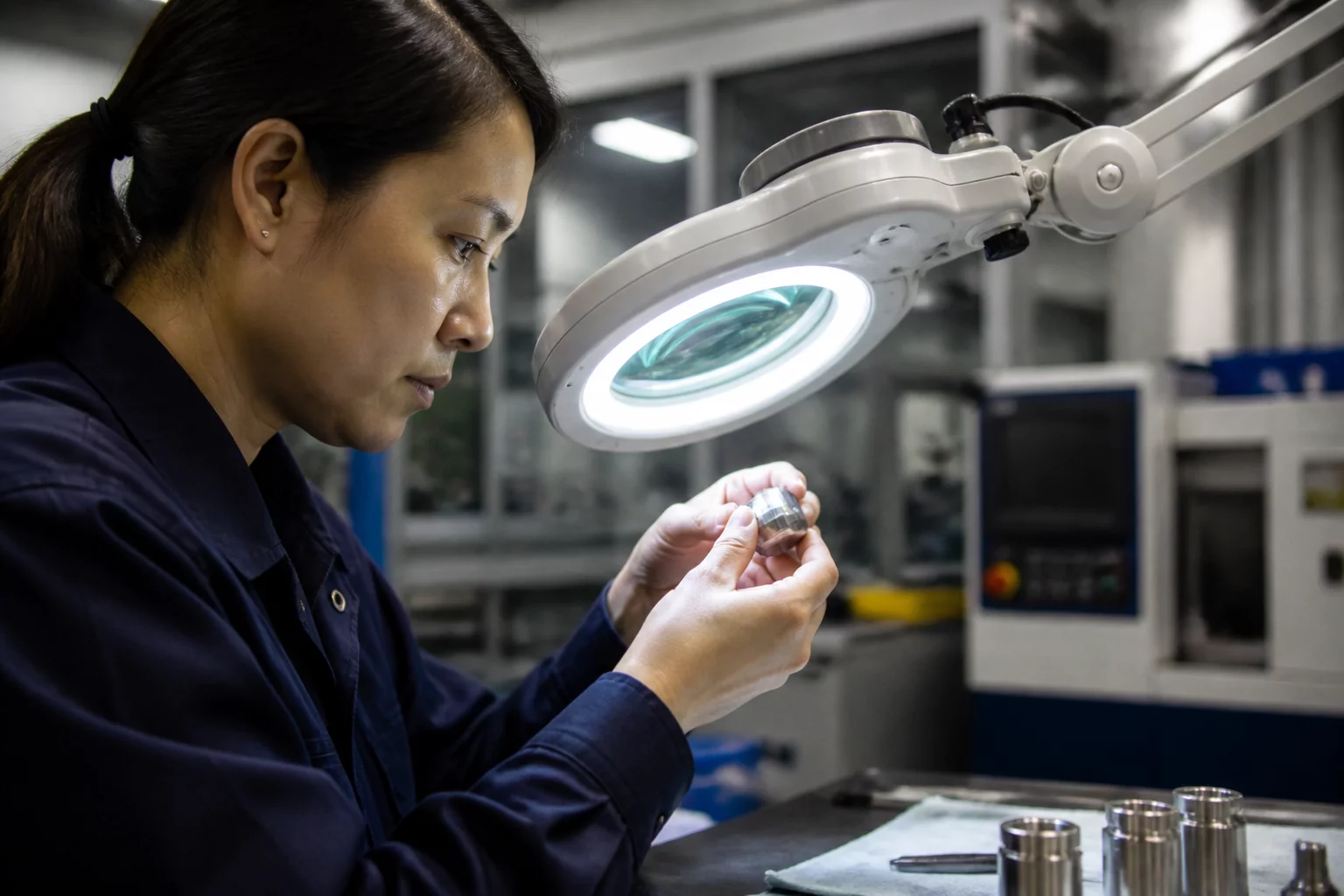
In the high-stakes environment of additive manufacturing, the boundary between success and failure often feels remarkably thin. You pull a part off the build plate and notice a slight surface irregularity. Do you toss it in the bin immediately, or do you flag it for another look? This choice defines the 'Review Again' vs 'Reject' workflow. Rejection is an absolute—a signal that the part is functionally compromised or legally non-compliant. A re-review, however, is a strategic pause. It suggests that while the part doesn't perfectly match the golden master, it might still fulfill its intended purpose without compromising safety or performance.
When to Request a Re-Evaluation
A quality inspector flags a component for re-evaluation when the deviation from the blueprint feels marginal. It might be a tiny string of filament on a non-mating surface or a slight discoloration that doesn't impact the structural integrity. In these moments, it is better to seek a second opinion rather than wasting a potentially perfect part. This status keeps the workflow fluid and prevents the immediate loss of resources. The team looks at the part through the lens of functional thresholds, deciding whether the variation is within an acceptable range for the specific application.
The Certainty of the Rejection Marker
Rejection serves as the ultimate wall in the quality pipeline. You mark a part as rejected when the defects are undeniable and dangerous. Cracks in the infill, warped bases that prevent assembly, or dimensions that exceed the maximum tolerance limits demand an immediate failure status. There is no benefit in reviewing a part that cannot perform its role. Such parts go straight to the scrap pile. This clear boundary protects the reputation of the manufacturing lab and ensures that only high-quality items reach the assembly phase.
Documentation and Feedback Loops
Every decision to reject or review needs a paper trail. Inspectors document the specific reason for their choice. If the issue keeps appearing, the feedback flows back to the design team. They might need to adjust the wall thickness or change the cooling settings in the slicer. This continuous loop turns every 'reject' into a lesson that improves the next build cycle. Otherwise, the same errors continue to appear, leading to a frustrating cycle of wasted material and lost time.
Managing the Decision Pressure
New team members often feel hesitant to reject parts, fearing it reflects poorly on their efficiency. However, a rigorous standard is the only way to maintain consistency. Senior leads should encourage a culture where 'Review Again' is used as a learning tool, while 'Reject' is respected as a necessary safeguard. This balance ensures that production speed never comes at the cost of part reliability. Take these steps to refine your process:
- Compare the defect against the critical requirements list.
- Check if the variation is cosmetic or functional.
- Verify if the part fits into the assembly jig.
- Consult the lead engineer if the material is a new experimental blend.
- Mark the part clearly to prevent it from entering the shipping bin by accident.
Need Expert Guidance?
Consult our specialized manuals for additive manufacturing standards and part review protocols.