Understanding Thermal Stability in Additive Manufacturing
Thermal cycling is a vital stress test for evaluating the structural bonds and layer adhesion within an additive manufactured component. When a part experiences alternating cycles of extreme heat and freezing temperatures, the material naturally expands and contracts. In 3D printed objects, this movement frequently exposes internal weaknesses that remain invisible during static room-temperature inspections. If the residual stresses from the original printing process haven't been accounted for, repeated thermal expansion leads to warping, delamination, or visible cracking at the interface of the layers.
Defining Functional Thresholds for Thermal Resistance
Establishing clear pass or fail criteria for thermal cycling requires knowing the end-use environment for the specific part. Engineers focus on several core stability metrics to make these decisions. Dimensional drift is the most common metric; it tracks the total change in critical features after a set number of cycles, such as fifty transitions between -20 and 80 degrees Celsius. Additionally, inspectors look for micro-fractures using magnification, checking for stress lines or crazing that might indicate future fatigue failure. Fitment integrity is also crucial, as assembly points like snap-fits or bolt holes must stay within their functional tolerance range to avoid loosening during vibration or heavy operation.
Assessment and Quality Review Procedures
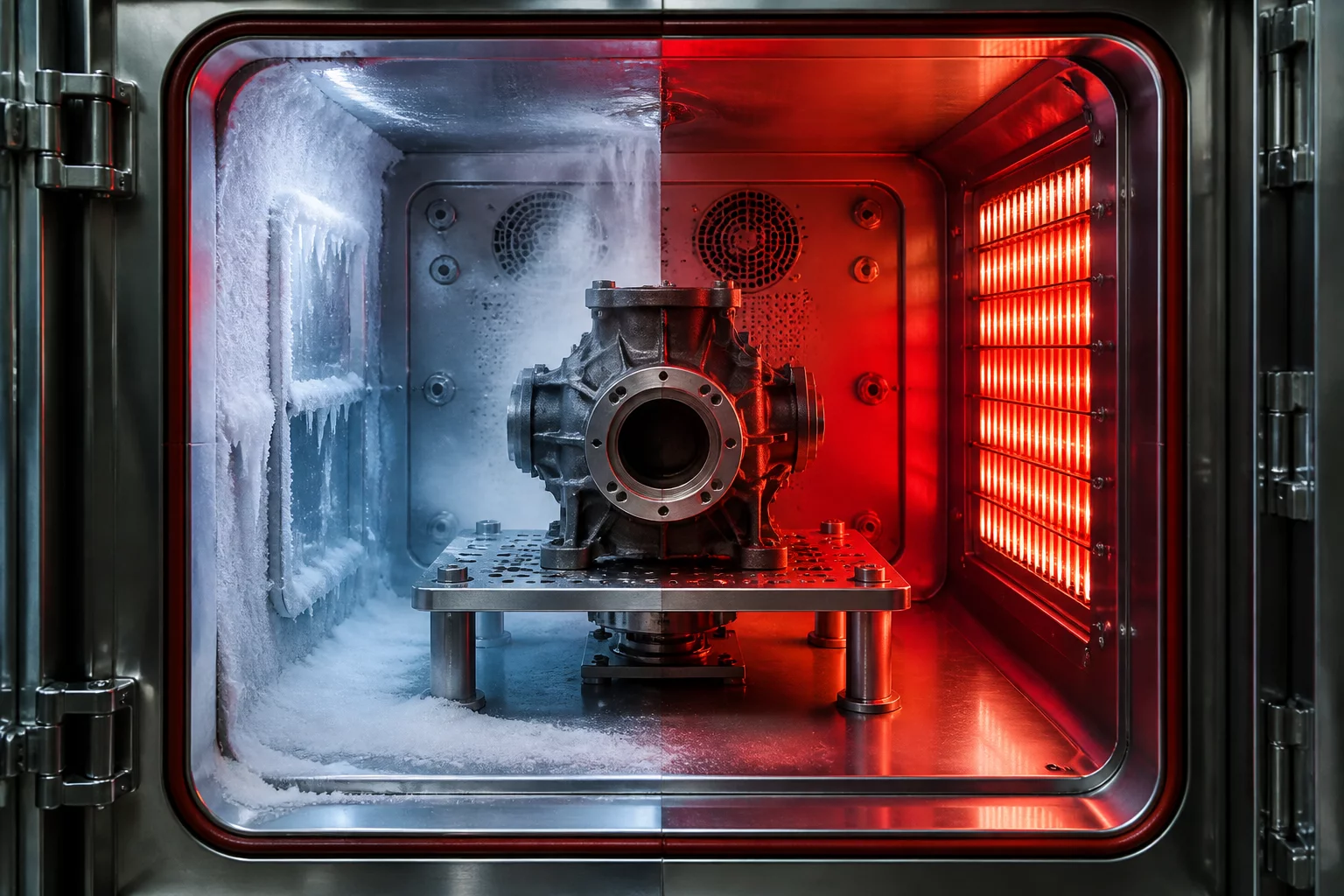
The standard evaluation procedure starts by taking a baseline measurement of the part immediately after post-processing. The component then moves into an environmental testing chamber. Quality control teams often apply a Review Again protocol if the part shows only minor aesthetic changes while maintaining all critical dimensions. However, if the thermal expansion coefficient of the filament used leads to significant delamination, the part is rejected immediately. Data gathered from these tests helps production teams decide if the infill density or wall thickness is sufficient for the intended application environment, ensuring that every accepted part performs reliably in the real world.