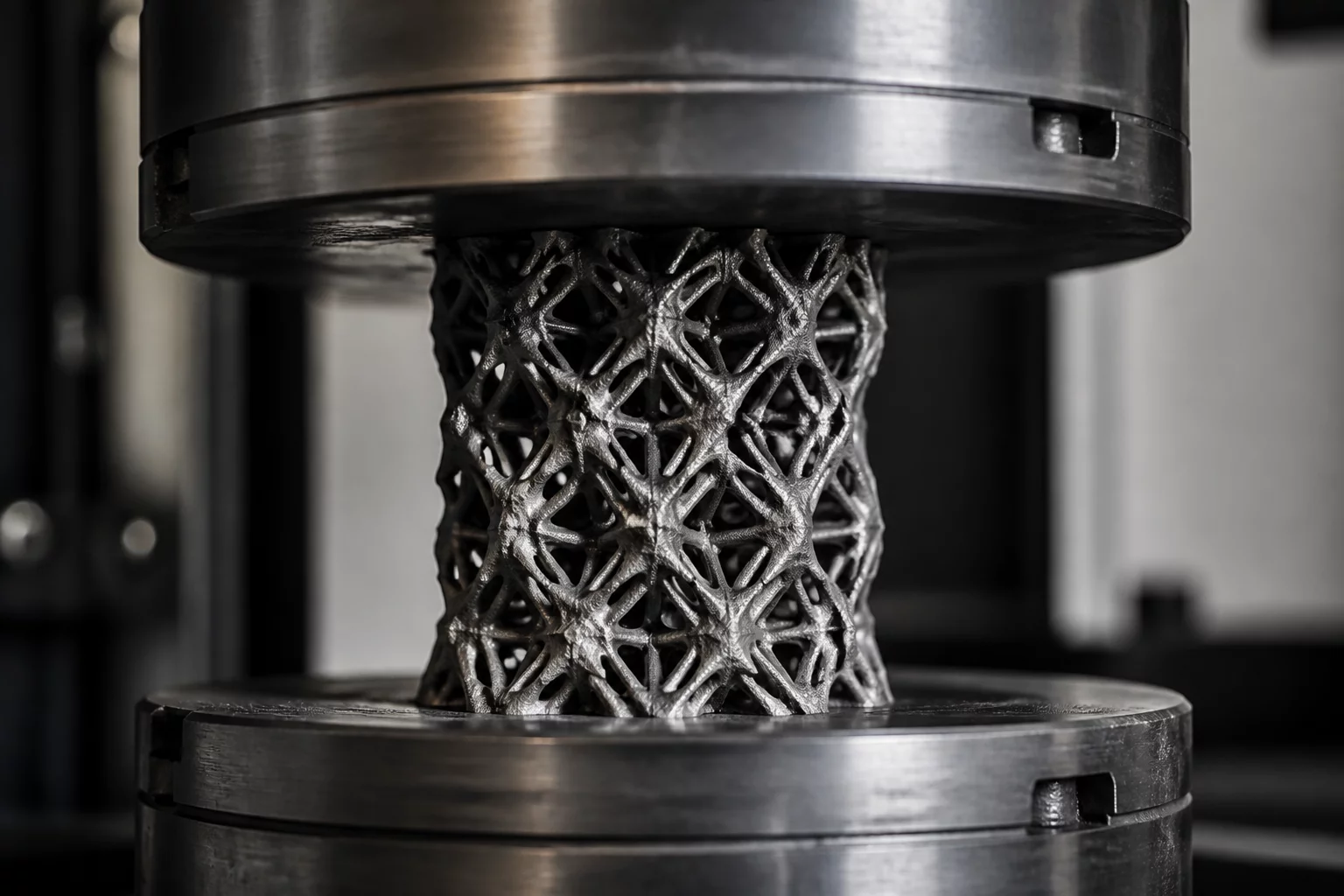
Detailed Analysis and Overview
The introduction of the EN ISO ASTM 52959 2026 standard marks a significant milestone in the industrialization of additive manufacturing (AM). Lattice structures, known for their high strength-to-weight ratios and exceptional energy absorption, have long been difficult to qualify due to their complex internal geometries. This standard provides a unified framework for characterizing these structures, ensuring that engineers can reliably predict how a part will behave under stress. It covers everything from the initial design phase to final inspection, focusing heavily on how thin struts and nodes interact within a larger volume.
Regulatory and Quality Standards
Quality assurance for metallic lattices requires more than just a surface check. The 2026 standard emphasizes the importance of non-destructive testing (NDT) alongside traditional mechanical evaluation. It establishes specific thresholds for porosity within the struts themselves and defines acceptable levels of dimensional deviation from the digital twin. By adhering to these regulatory guidelines, manufacturers can guarantee the repeatability of their processes, which is crucial for safety-critical applications in aerospace and medical implants.
Core Acceptance Metrics
- Strut thickness variation limits (±0.05mm typical).
- Minimum nodal connectivity and fusion integrity checks.
- Relative density accuracy compared to CAD design.
Standard Implementation
Implementing this standard requires a shift in how quality control teams approach part review. Instead of looking at the part as a solid block, they must now analyze the "micro-architecture" of the lattice. This involves utilizing advanced CT scanning techniques and specialized compression tests that reflect real-world loading conditions. By integrating these steps into the production workflow, teams can catch defects like incomplete fusion or trapped powder that could lead to premature failure in the field.